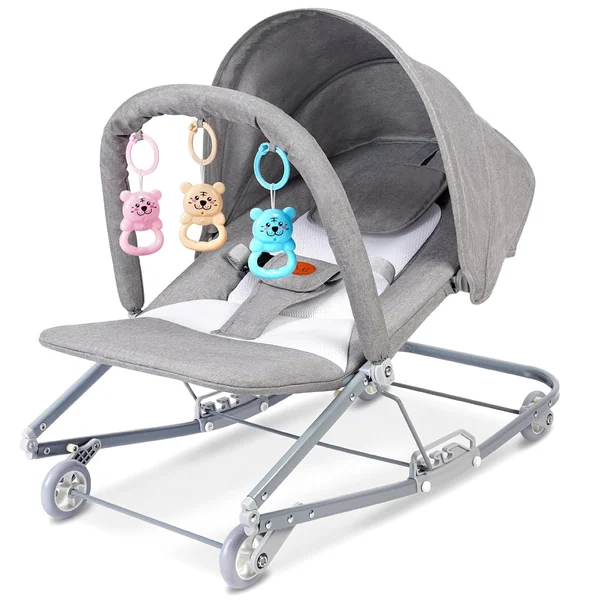
Rocking Bouncer with Canopy
Rocks, rolls and shades, 0 to 18 months
- Age range0–18 months
- ModesRock, roll, hold still
- Light Grey
- Grey
The short version: on the floor, never on a table, harness always fastened, and a flat cot for sleep. The long version is below, with the sources we read.
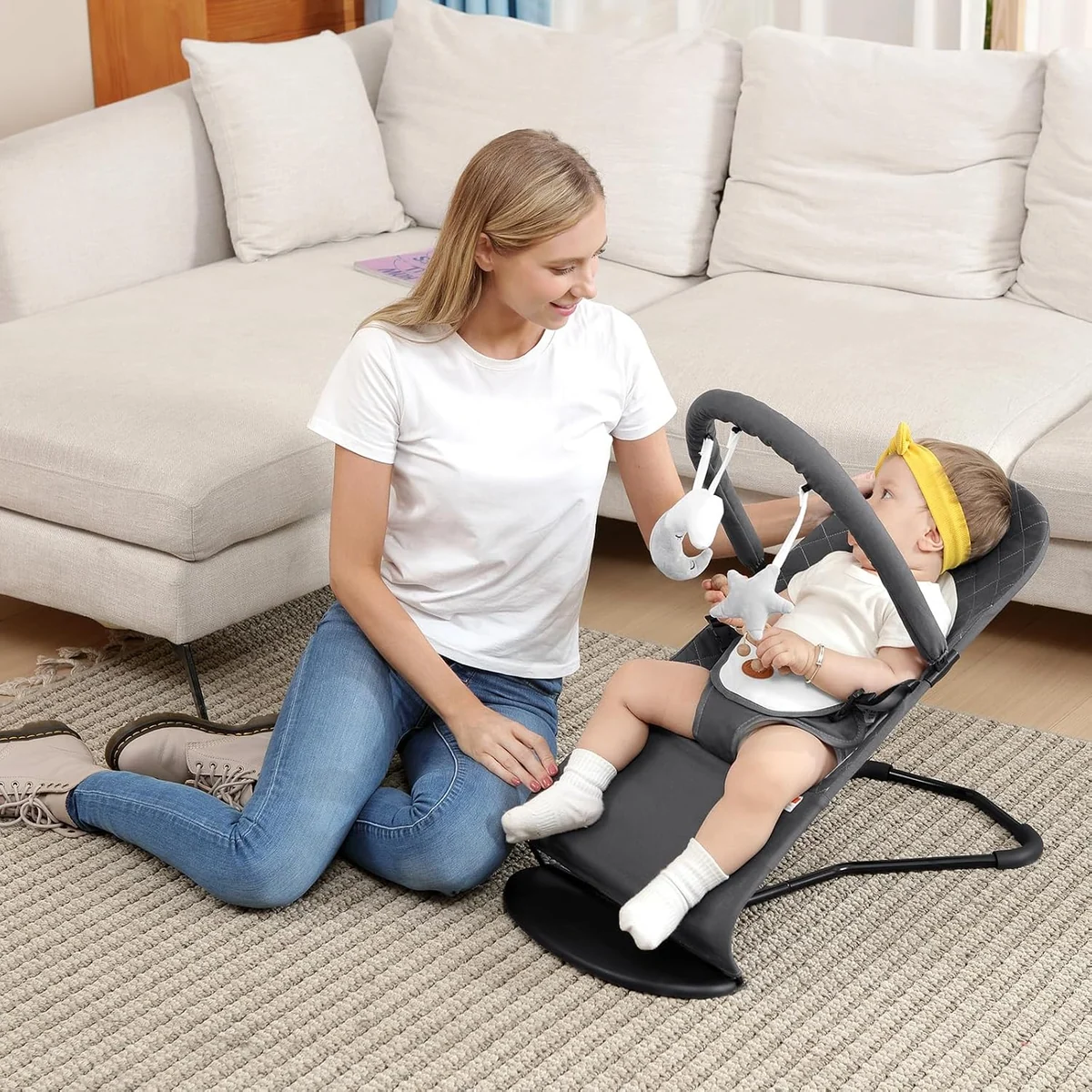
A reclined seat is comfortable, and a comfortable baby sleeps. That is not a design fault and it is not your mistake. It is the next step that matters.
If your baby falls asleep in a car seat, stroller, swing, infant carrier or sling, you should move them to a firm sleep surface on their back as soon as possible.
American Academy of Pediatrics (HealthyChildren.org), A Parent's Guide to Safe Sleep. Read 20 September 2026.
The angle is the reason. A reclined head tips the chin towards the chest, and a newborn neck cannot correct it.
Any surface that inclines more than 10 degrees isn't safe for your baby to sleep on.
American Academy of Pediatrics (HealthyChildren.org), A Parent's Guide to Safe Sleep. Read 20 September 2026.
The federal safety agency names the category without hedging, including rockers and soothers.
Inclined products with an angle greater than 10º -such as a rockers, gliders, soothers, and swings- should never be used for infant sleep.
U.S. Consumer Product Safety Commission, Safe Sleep. Read 20 September 2026.
Rocks, rolls and shades, 0 to 18 months
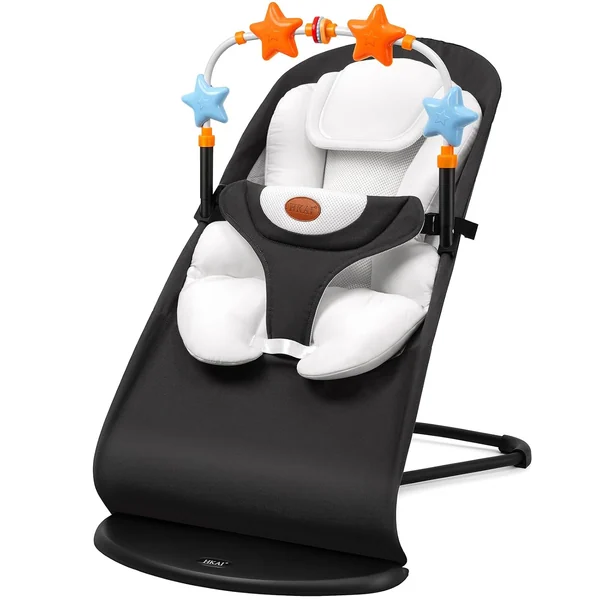
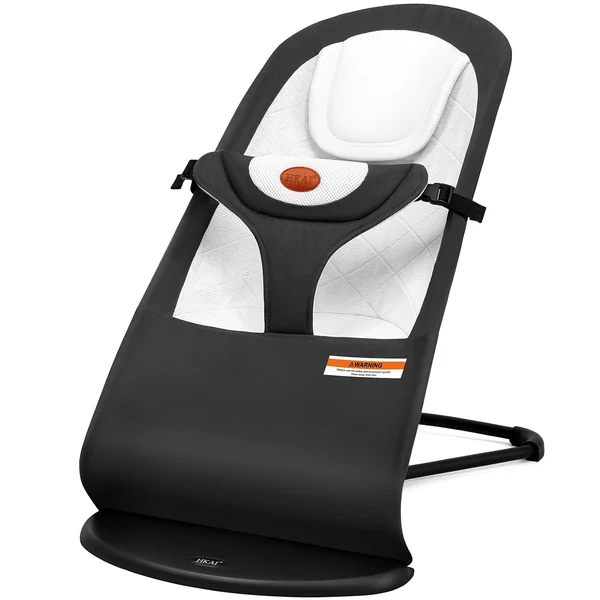
Contoured seat with a headrest area, 0 to 12 months
Bouncer seats and soft carriers sold in the United States each sit under a federal rule that points at an industry test specification.
Each infant bouncer seat must comply with all applicable provisions of ASTM F2167-22, Standard Consumer Safety Specification for Infant Bouncer Seats
Electronic Code of Federal Regulations, 16 CFR Part 1229, Safety Standard for Infant Bouncer Seats. Read 20 September 2026.
Each soft infant and toddler carrier must comply with all applicable provisions of ASTM F2236-24, Standard Consumer Safety Specification for Soft Infant and Toddler Carriers
Electronic Code of Federal Regulations, 16 CFR Part 1226, Safety Standard for Soft Infant and Toddler Carriers. Read 20 September 2026.
We are not printing a certificate on this page, and a badge here would prove nothing. What is useful to a parent is that the category is regulated, the tests exist, and the stability, harness and seam checks are not optional.
This page is general information about using baby equipment. It is not medical advice. For anything about your own baby, ask your paediatrician or health visitor.