Bouncer Seat
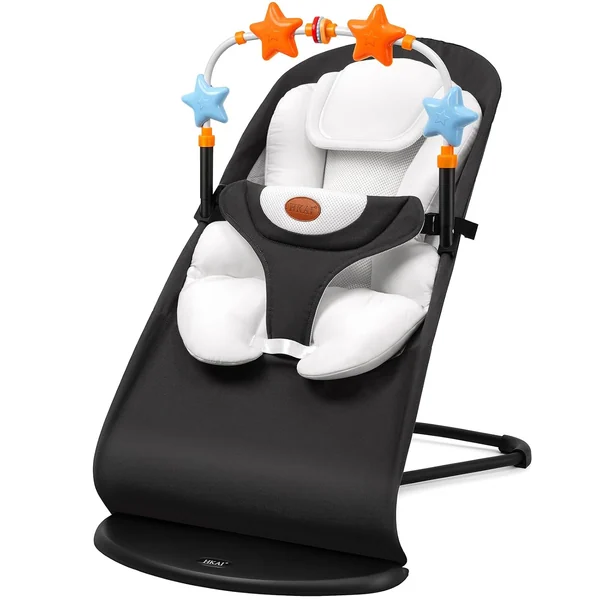
Contoured seat with a headrest area, 0 to 12 months
- Age range0–12 months
- Recline3 positions
It will happen on the first day. A reclined seat and a full stomach put a baby out in four minutes. The question is what happens in the next four.
A baby asleep in a bouncer should be moved to a flat cot on their back. That is the whole answer, and it comes from the people who write the rules rather than from us.
If your baby falls asleep in a car seat, stroller, swing, infant carrier or sling, you should move them to a firm sleep surface on their back as soon as possible.
American Academy of Pediatrics (HealthyChildren.org), A Parent's Guide to Safe Sleep. Read 20 September 2026.
Waking a sleeping baby feels like sabotage at three in the afternoon. Do it anyway. The transfer gets easier with practice, and a cot that smells familiar helps more than tiptoeing does.
A reclined seat holds the head forward and the chin down. For a newborn with a heavy head and weak neck muscles, that position narrows the airway.
The ten degree line is the one to remember, and it is written into the guidance twice over.
Any surface that inclines more than 10 degrees isn't safe for your baby to sleep on.
American Academy of Pediatrics (HealthyChildren.org), A Parent's Guide to Safe Sleep. Read 20 September 2026.
Our deepest recline is well past ten degrees, as every bouncer's is. That is right for a waking baby and wrong for a sleeping one.
The federal safety regulator names the category directly, including rockers and soothers.
Inclined products with an angle greater than 10º -such as a rockers, gliders, soothers, and swings- should never be used for infant sleep.
U.S. Consumer Product Safety Commission, Safe Sleep. Read 20 September 2026.
We would rather quote that sentence than write a gentler version of it. A seat sold for the waking hours is not a sleep product and will not become one because the baby is already asleep.
Bouncer seats sold in the United States sit under a federal standard, and that standard points at an industry specification for the category.
Each infant bouncer seat must comply with all applicable provisions of ASTM F2167-22, Standard Consumer Safety Specification for Infant Bouncer Seats
Electronic Code of Federal Regulations, 16 CFR Part 1229, Safety Standard for Infant Bouncer Seats. Read 20 September 2026.
We are not printing a certificate here, and no badge on this page would prove anything. What the rule tells a parent is the useful part: the category is regulated, the test method exists, and the harness, the frame and the stability tests are not optional extras.
Two hands, slow, and support the head and the bottom at the same time. A baby who wakes usually wakes because one end dropped before the other.
Unclip the harness before you lift rather than during. Fumbling with a buckle while holding a sleeping baby is how they end up awake and cross.
If the cot is cold, warm the sheet with your hand for ten seconds first. Temperature change wakes babies more reliably than noise does.
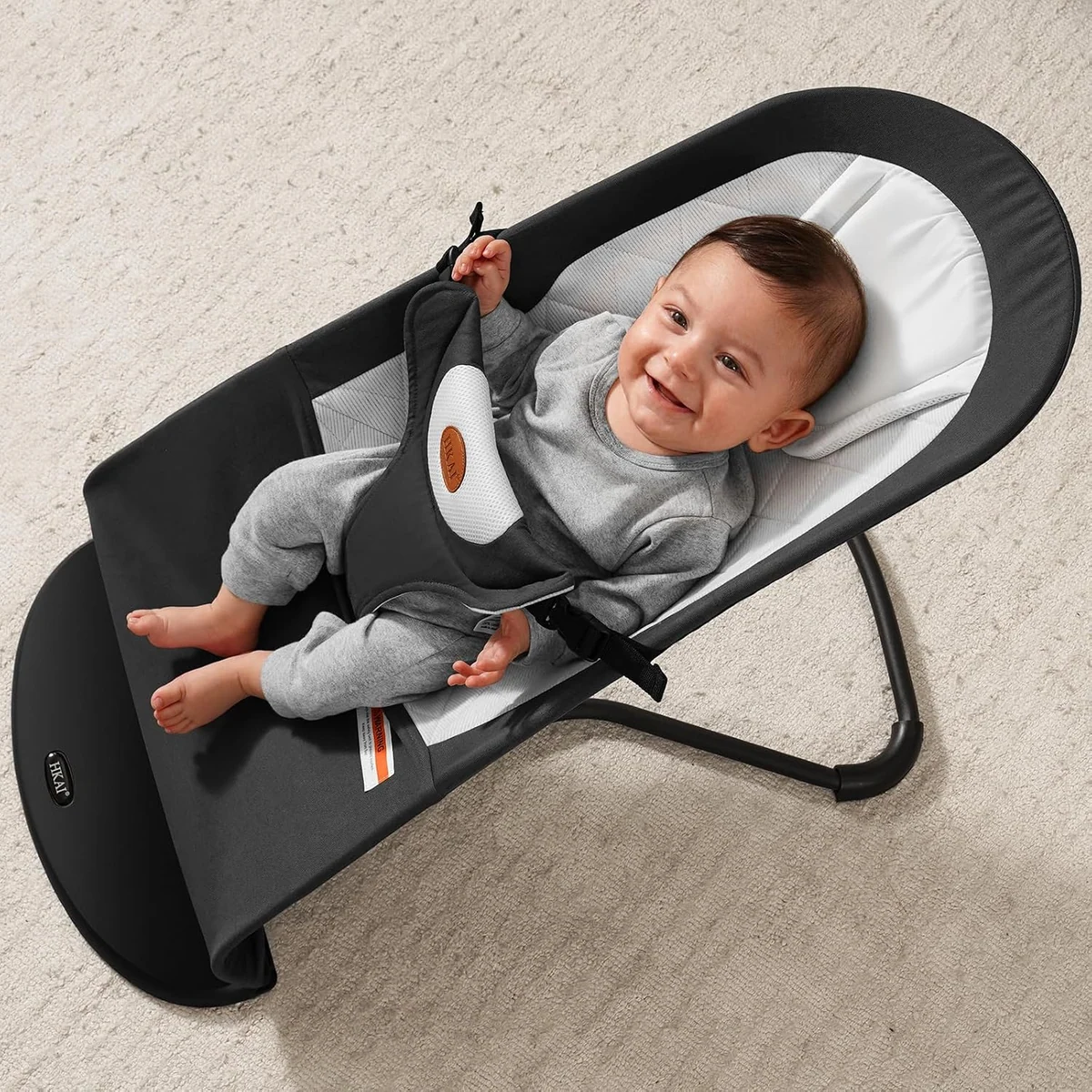
Every product we make is for waking hours. That is a choice, not a gap in the range.
Sleep products for infants are a separate category with their own federal rule, and a seat that reclines is not in it. We would rather be clear about the limit than sell you something that blurs it.
If you want the range in one sentence: we make the place a baby sits while you get something done, and the place a baby rides while you walk somewhere.
Contoured seat with a headrest area, 0 to 12 months
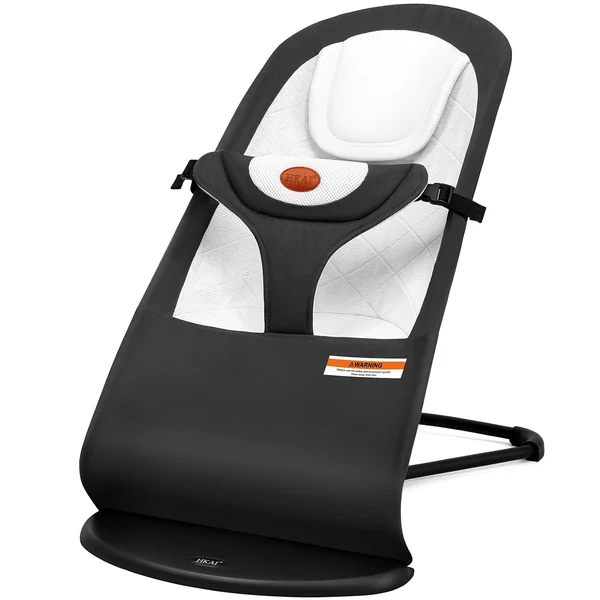
Contoured seat with a headrest area, 0 to 12 months
This page is general information about using baby equipment, not medical advice. For anything about your own baby, ask your paediatrician or health visitor.
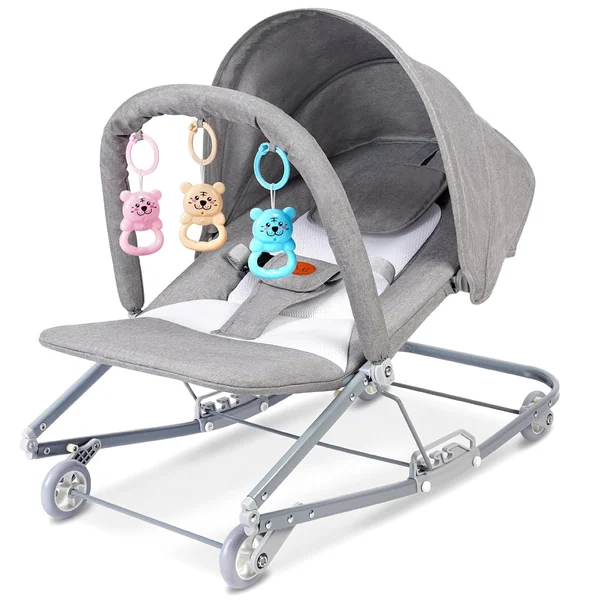
Rocks, rolls and shades, 0 to 18 months
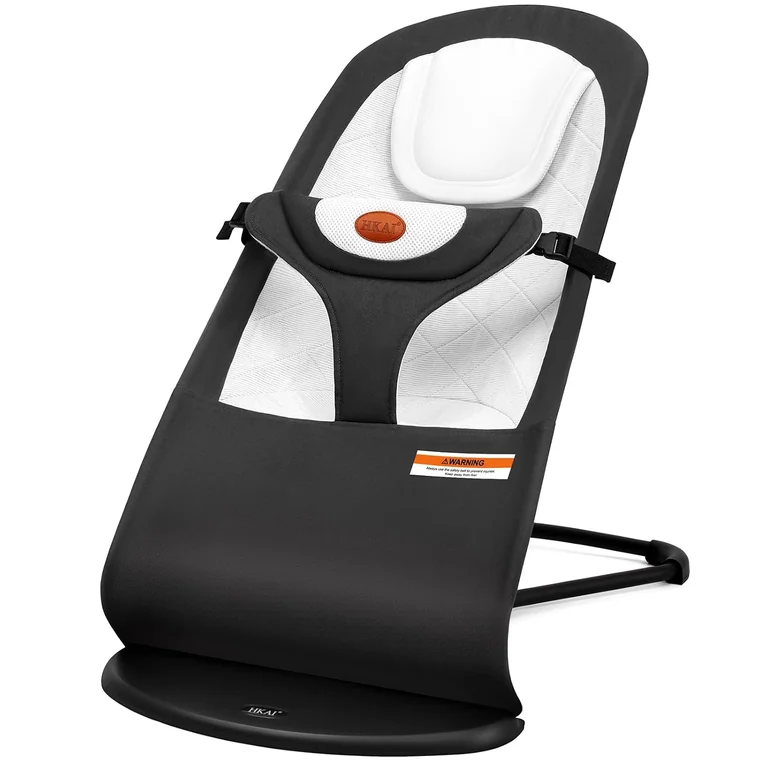
Contoured seat with a headrest area, 0 to 12 months